
Stickman Hook: Gameplay Guide and Tips for Beginners

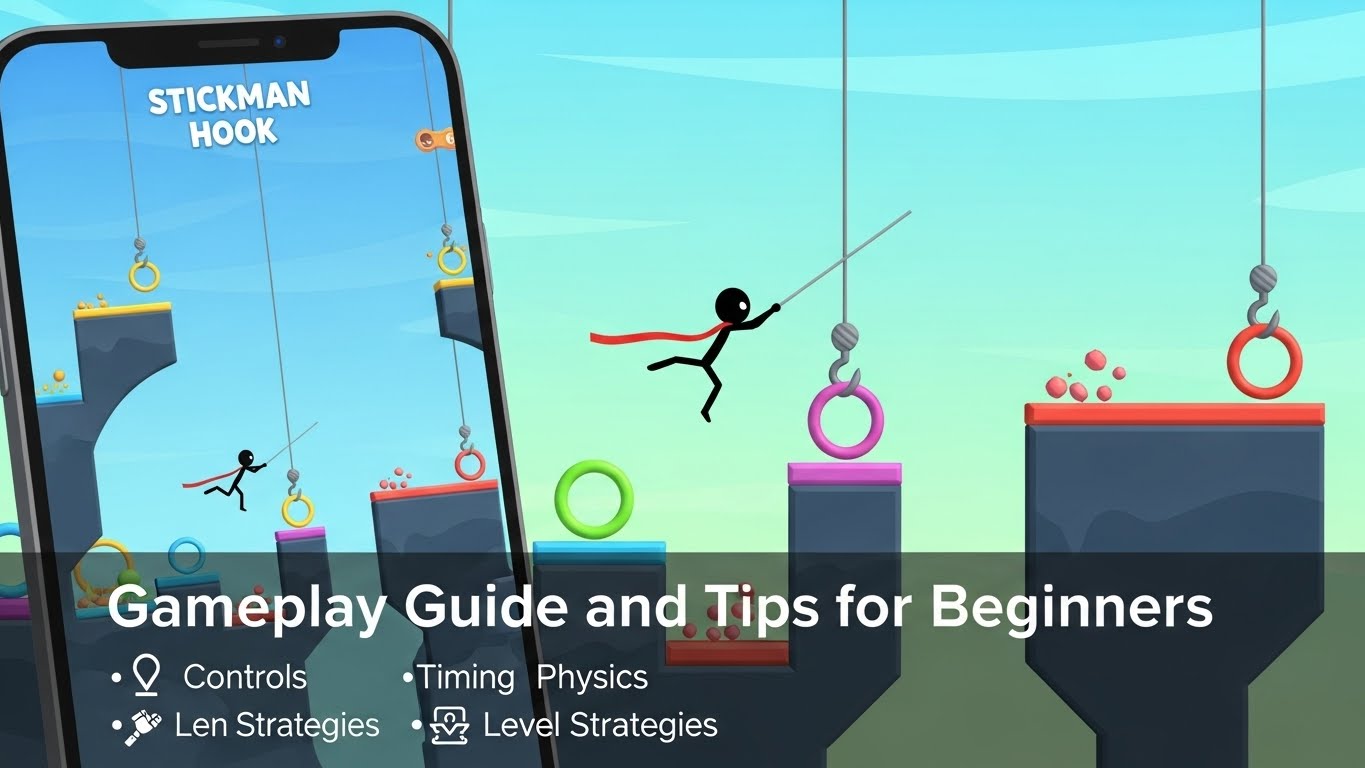
If you have ever played stickman hook, you know how deceptively simple and wildly fun it can be. You tap, you swing, you fly and then suddenly you crash straight into a wall you did not even notice. It is a game that blends physics, timing and instinct into one fast, satisfying loop.
This guide is written for true beginners, but with the mindset of a player who wants to actually get good. You are not just going to tap randomly and hope for the best you are going to understand why swings behave the way they do and how to control your character with precision and confidence.
What Makes Stickman Hook So Engaging
Most mobile games rely on complicated mechanics or endless features, but stickman hook keeps its appeal by being incredibly pure. You control one action swinging and the game builds everything else around how well you can manipulate it.
Why players love it
- Instant learning curve: You understand the game in 3 seconds.
- Instant failure: You also fail in 3 seconds and you want to try again.
- Rewarding flow: When you connect a perfect chain of swings, it feels smooth, rhythmic, almost musical.
- Short, satisfying levels: Ideal for casual play or intense improvement sessions.
- Physics driven fun: No two swings feel exactly the same; small timing changes lead to big outcomes.
The Physics of Stickman Hook Explained Simply
Let’s break the movement down into simple, real world logic. When your character attaches to a hook, the game instantly turns your movement into a pendulum swing.
The Swing Arc — Your Source of Power
- Release too early → You go weak and short
- Release at the bottom → You go fast but downward
- Release slightly after the bottom → Perfect forward power
The moment just after the lowest part of the swing gives you the strongest forward momentum.
- barely reaching the next hook
- cleanly flying past two hooks at once
- or slamming into a wall like a rubber band gone wrong
How Gravity Helps You (Instead of Hurting You)
Beginners often fight gravity. They try to “correct” their movement too often by tapping frantically.
But pros do the opposite:
They use gravity to create speed.
This looks like
- letting your character fall before grabbing a hook (bigger arc)
- releasing downward to set up a cleaner next swing
- dropping intentionally off a hook to reposition your angle
Controls — The Foundation of Your Skill
Even though stickman hook has only one real input, how you use it matters.
Mobile Controls
| Action | Input | Description |
|---|---|---|
| Hook | Tap | Attach to nearest hook above |
| Hold Swing | Keep finger pressed | Build momentum |
| Release | Lift finger | Launch off the hook |
Human Tip
Use your dominant thumb — you will develop faster muscle memory.
PC / Browser Controls
| Action | Input |
|---|---|
| Hook / Swing | Left click or Space |
| Release | Let go |
| Restart | R |
Human Tip
PC players often become more precise because clicking feels more tactile than tapping.
Level Elements and How to Outsmart Them
Every level in stickman hook combines several familiar elements. Understanding how each one behaves helps you solve levels deliberately instead of reacting blindly.
Standard Hoo
- timing
- rhythm
- swing control
Beginner Mistake
Hooking too late, reducing swing size.
Better Approach
Hook earlier, let the swing widen naturally, and release when momentum peaks.
Distant or High Hooks
These look intimidating, but they actually reward good technique.
How to reach them
- Use a long arc
- Release late but not too late
- Angle your momentum upward
Bounce Pads
- speed boosters
- direction resets
- height generators
Beginner Way
Bounce, panic, tap the closest hook.
Better Way
Bounce → wait a half second → attach with intention
This gives you control instead of desperation.
Tight Tunnels
Narrow tunnels force you to be gentle.
Use
- small swings
- early releases
- correction hooks
Vertical Climbs
If hooks are above you instead of in front
Beginner Approach
Attach → small swing → release upward.
Better Method
Use diagonal hooks to build upward AND forward momentum at once, reducing the number of swings needed.
The 10 Most Important Techniques for Mastery
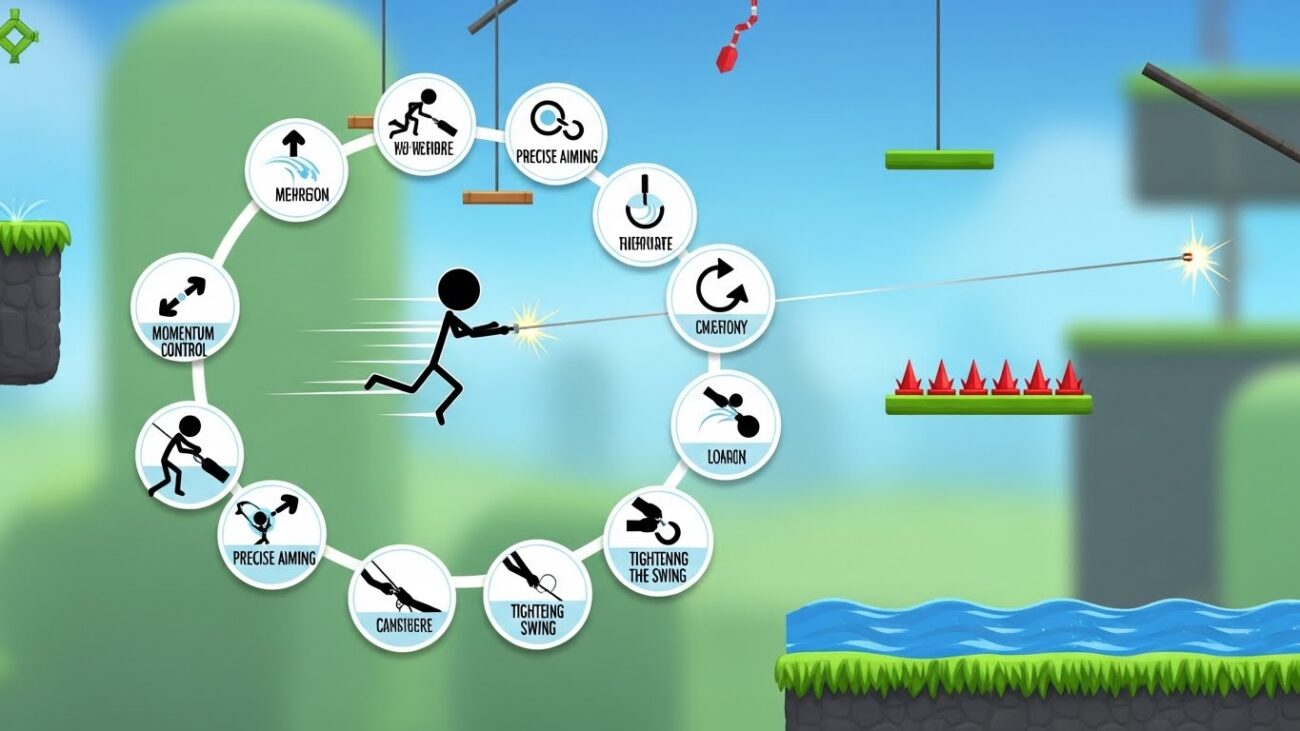
These techniques are based on real player behaviors not just theory. They are the skills that separate casual players from people who finish levels cleanly and confidently.
1. The One Swing Method
Perfect for early levels.
Steps
- Grab hook.
- Let one full swing happen.
- Release on upward arc.
2. The Big Arc
- hook early
- allow swing to widen
- release late
3. The Micro Swing Correction
Sometimes you are falling weirdly and you need to quickly fix your direction.
Do this
- Tap a nearby hook.
- Swing very briefly.
- Release once aligned.
4. Bounce to Hook Momentum Stack
One of the strongest techniques in stickman hook.
How to use it
- Hit bounce pad cleanly.
- Rise into a hook.
- Build a small, fast swing.
- Release for a turbo launch.
This creates explosive forward speed.
5. Minimal Hook Approach
Good players ask:
“Do I really need that hook?”
Often the answer is no.
Skipping hooks reduces:
- awkward angles
- unnecessary swings
- loss of speed
6. The Controlled Drop
Dropping is not failing.
Sometimes you NEED a fall to reposition yourself into a better approach angle.
7. Angle Reading
- If your body is angled up → you will climb
- If angled forward → you will travel
- If angled down → you will descend
8. Swing Rhythm Control
hold… swing… release
hold… swing… release
9. Safe vs Fast Lines
A “line” is the intended path you take.
- Safe line: uses many hooks; forgiving
- Fast line: uses fewer hooks; requires confidence
10. Reaction vs Prediction
Beginner mindset:
I react when something appears.
Better mindset:
I already know what the next 2 hooks are.
A Real Example Level Breakdown
Let is walk through a typical level layout and analyze how an experienced player approaches it.
Level Layout Example
- Start → single hook above
- Long gap
- Bounce pad
- Two hooks in a curve
- Wall obstacle
- Final platform
Step by Step Strategy
1. First Hook
Attach immediately.
Release shortly after bottom arc → long launch.
2. Long Gap
Do nothing momentum carries you.
3. Bounce Pad
Aim for center.
Rise → attach to first hook above.
4. Curved Hooks
Use small, controlled swings.
The curve helps reposition your angle away from the wall.
5. Final Release
Aim slightly upward to land clean on the finish block.
Common Beginner Mistakes
Let’s call out mistakes honestly because fixing them leads to the fastest improvement.
Mistake 1: Tapping too much
Spamming hooks is the #1 cause of failure.
Fix
Only tap with intention.
Your swing should feel smooth, not panicked.
Mistake 2: Releasing randomly
Random releases → random results.
Fix
Release slightly after the lowest point always test this timing.
Mistake 3: Ignoring the next hook
Tunnel vision kills momentum.
Fix
Look one hook ahead before each release.
Mistake 4: Overcorrecting mid swing
Beginners often try to “fix” a swing that is not broken.
Fix:
Let gravity handle most of the work.
Mistake 5: Fearing long arcs
Big arcs feel scary but are extremely powerful.
Fix
Practice on easy levels by intentionally widening your swings.
Practice Routine for Rapid Improvement
Here’s a simple daily training plan that develops real skill.
H3: 10-Minute Routine
Minutes 1–3: Smooth Swing Drills
Replay level 1–5.
Focus on rhythm, not speed.
Minutes 4–6: Big Arc Practice
Use levels with spaced out hooks.
Aim to reach distant hooks with fewer swings.
Minutes 7–8: Bounce Pad Mastery
Practice bounce to hook launches.
Minutes 9–10: Hook Skipping
Pick an easy level.
Try skipping 1 hook per attempt.
Final Advice
Stickman Hook is not about tapping fast. It is about tapping smart.
- controlled swings
- clean releases
- intentional momentum
- predictive pathing
Stickman Hook rewards players who think ahead, stay calm, and trust the physics. With the techniques in this guide, you will start clearing levels smoothly, chaining beautiful arcs and making moves you once thought impossible.