
Level Up Games: What the Brand Represents in Online Gaming Communities

Gaming has always been about more than buttons, scores, or graphics. At its best, gaming is about progression, belonging and identity. That is why the phrase level up games has grown beyond a simple title or business name and become a meaningful idea inside online gaming communities.
To many players, level up games represents the feeling of starting small, learning through failure, improving over time, and eventually becoming part of something bigger than yourself. It reflects how gamers grow not just in skill, but socially, emotionally, and even professionally.
What “Level Up Games” Means to Gamers
When gamers hear level up games, they do not interpret it literally. They hear a concept.
At its core, level up games means
- Progress earned through effort
- Skills developing step by step
- A safe place to fail, learn, and improve
- Communities that grow alongside players
Unlike hyper-competitive environments that reward only top performers, level up games culture values the journey. Beginners matter. Learning matters. Showing up consistently matters.
This idea mirrors traditional RPG mechanics
- You start weak
- You grind
- You gain experience
- You unlock new abilities
- You become recognizable in the world
That loop applies not just to characters on screen, but to real people behind the keyboard.
The Psychological Power of “Leveling Up”
Why progression matters more than winning
Winning is temporary. Progress is satisfying.
That’s why so many successful online games emphasize
- XP bars
- Skill ranks
- Seasonal ladders
- Achievements and milestones
Level up games taps into a deep psychological driver: visible growth. When players can see improvement even slow improvement they stay engaged longer and feel more connected to the game and its community.
From a human perspective
- Losing but learning feels better than winning by luck
- Progress builds confidence
- Confidence fuels long-term participation
Online communities built around level up games reinforce this by celebrating improvement, not just dominance.
Level Up Games as a Community Identity
More than a name it’s a signal
Inside online gaming spaces, names matter. Clan names, guild names, server names, and brand names all send signals about values.
The phrase level up games signals
- Growth-focused environments
- Supportive learning culture
- Long-term engagement
- Respect for newcomers
| Name Type | Emotional Signal |
|---|---|
| “Elite Killers” | Exclusive, high pressure |
| “Ranked Gods” | Skill gatekeeping |
| Level Up Games | Learning, growth, inclusion |
How Level Up Games Culture Welcomes Beginners
Creating low pressure entry points
One defining trait of level up games communities is how they treat beginners. Instead of asking “How good are you?” the question becomes “Where are you starting?
Healthy communities do things like:
- Provide build guides without judgment
- Explain mechanics without sarcasm
- Encourage questions in public channels
- Pair veterans with newcomers
This mirrors good game design
- Tutorials instead of punishment
- Gradual difficulty curves
- Starter gear that feels empowering
- Clear goals instead of confusion
Social Belonging and Shared Growth
Why people stay even after they stop grinding
Many gamers don’t stay because of content updates. They stay because of people.
Level up games communities often become
- Daily hangout spaces
- Emotional support networks
- Social routines after work or school
- Creative outlets for art, memes, and stories
What keeps people returning isn’t just the next level it’s shared history
- Remembering when a friend was “bad” and watching them improve
- Laughing at old mistakes
- Celebrating first wins together
Competitive Without Being Toxic
The balance that most communities fail to achieve
Competition isn’t the enemy of level up games. Toxic competition is.
Healthy progression-focused communities understand this balance:
- Compete seriously
- Respect opponents
- Review losses constructively
- Encourage rematches instead of trash talk
In level up games environments
- Skill gaps are acknowledged, not mocked
- Improvement is praised more than rankings
- High-level players mentor rather than gatekeep
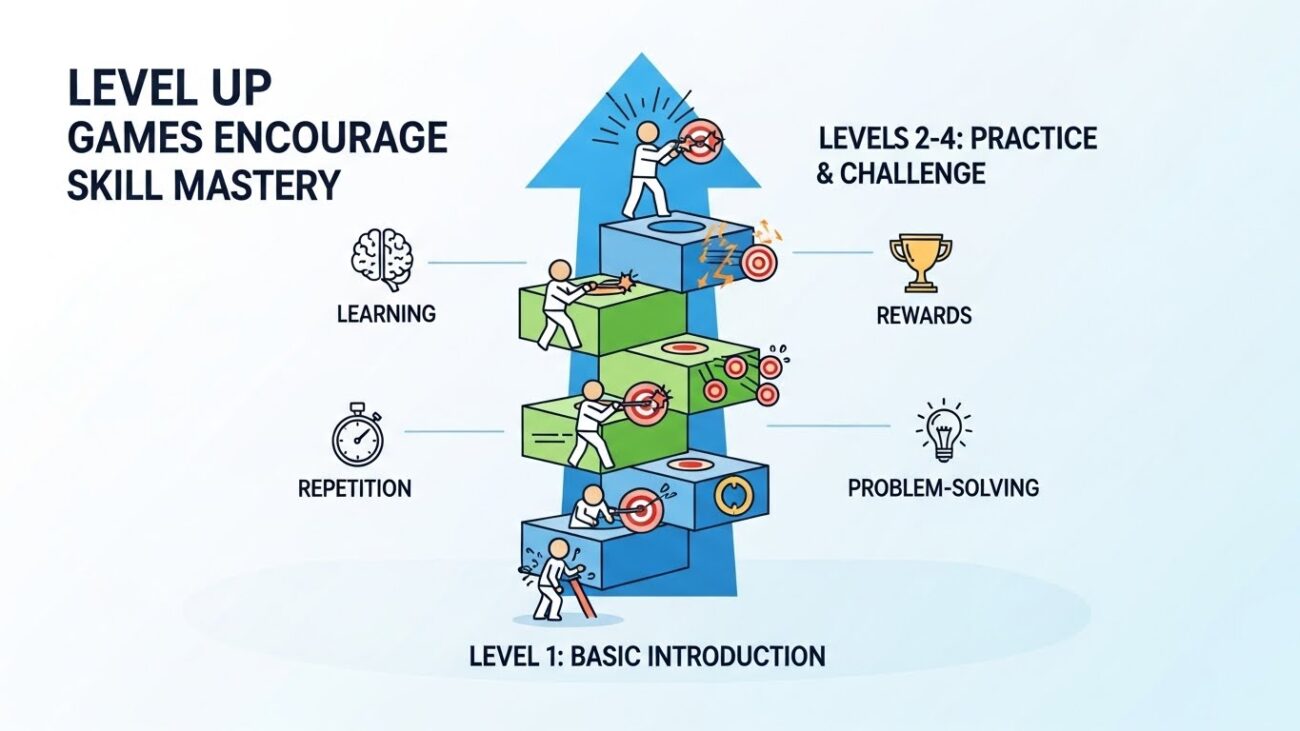
How Level Up Games Encourages Skill Mastery
From casual play to deep knowledge
One reason level up games communities thrive is that they reward curiosity.
Players are encouraged to ask:
- “Why does this strategy work?”
- “How can I optimize this build?”
- “What did I do wrong in that match?”
Over time, community members evolve into
- Theorycrafters
- Guide writers
- Analysts
- Coaches
- Content creators
This knowledge-sharing loop raises the overall skill level of the group and creates internal leaders—one of the strongest indicators of a healthy gaming ecosystem.
Real-Life Skills Built Through Level Up Games Communities
This is often overlooked, but extremely important.
People involved in level up games communities frequently develop:
- Communication skills through voice chat and leadership roles
- Conflict resolution abilities as moderators or guild leaders
- Organizational skills by running events or schedules
- Teaching skills by helping newer players learn
For younger gamers especially, this type of environment can be transformative. It’s one of the few digital spaces where progression is visible, measurable, and socially reinforced.
Lessons for Game Developers
Why “level up” design creates loyal players
Developers can learn a lot from the philosophy behind level up games.
Games that succeed long-term usually
- Reward time investment fairly
- Avoid hard progression walls
- Communicate clearly how to improve
- Respect different skill levels
Design choices that support a level up games mindset include
- Skill-based matchmaking
- Visible progression systems
- Practice modes without penalties
- Transparent stats and systems
Lessons for Community Managers
Build ladders, not walls
If you manage a game community, Discord, or forum, level up games offers a powerful blueprint.
Ask yourself
- Do new members know where to start?
- Is there a clear path from beginner to advanced?
- Are experienced members encouraged to help?
Practical steps
- Create “New Player” channels
- Pin learning resources
- Recognize members who help others
- Promote positive behavior publicly
Content Creators and the Level Up Games Effect
Why “learning content” performs so well
Content that aligns with level up games values consistently performs better over time.
Examples include
- Beginner guides
- “From zero to hero” series
- Mistake breakdowns
- Improvement-focused streams
Why Level Up Games Stands the Test of Time
Trends in gaming change fast
- Genres rise and fall
- Mechanics evolve
- Platforms shift
But progression never goes out of style.
As long as humans enjoy:
- Learning
- Improving
- Belonging
- Achieving goals
Final Thoughts
At its deepest level, level up games mirrors real life.
We:
- Start with limited skills
- Learn through repetition
- Fail often
- Improve slowly
- Grow through community support
That’s why online gaming communities built around level up games values feel meaningful. They reflect human growth in a digital format.
Whether you are a player, a leader, a developer, or a creator, embracing the spirit of level up games means choosing progress over perfection and building spaces where everyone is allowed to improve.