
EducationBeing Com: A Simple Guide to Learning That Actually Works

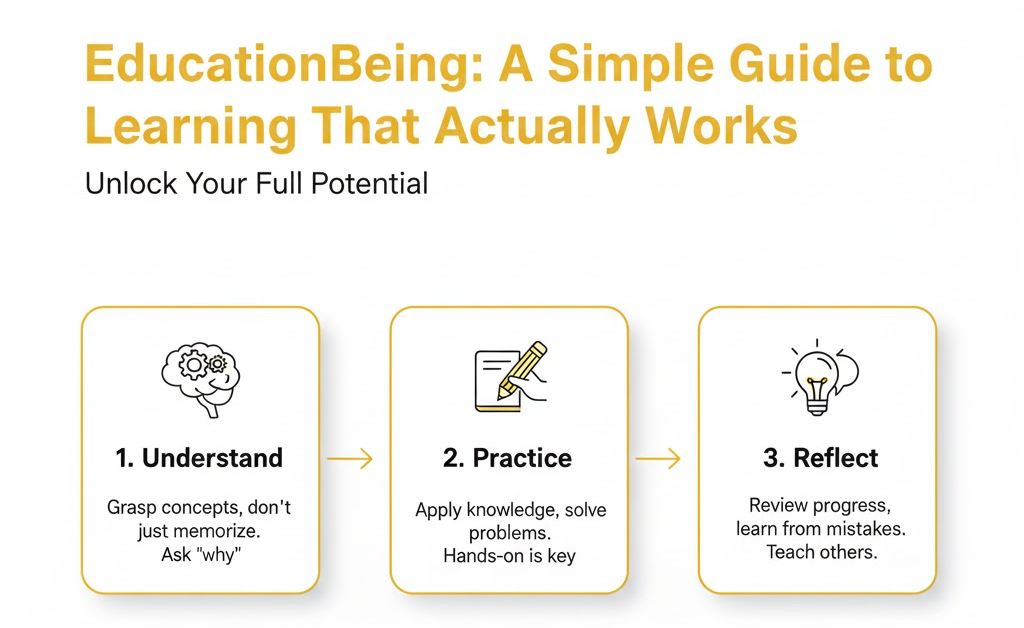
Learning today looks very different from what many of us grew up with. Schools, online classes, AI tools, and endless tutorials are everywhere — yet many people still feel stuck, overwhelmed, or unsure how to improve their skills. That’s where the idea behind educationbeing com becomes useful: Learning that fits real life, not the other way around.
Students, parents, and working adults can learn better with simple tools, real habits, and personal stories from people who changed their routines and saw real results.
What EducationBeing Com Really Means in Daily Life
When I first heard the word educationbeing com, it sounded like another buzzword. But after speaking to teachers, tutors, and even parents who homeschool, I realised it describes something simple:
Learning that matches who you are, how you think, and what you want to become.
Here’s what this looks like in practice:
- You learn at your own pace, not a forced schedule.
- You use tools that make sense for your style — not just what’s trending.
- You focus on fundamental skills, not just grades or test scores.
- You build habits that last longer than motivation.
One high school senior I interviewed told me that switching from strict rote Learning to practical note-taking helped her raise her grades in three subjects. She didn’t study more hours — she studied smarter.
Why Many People Struggle With Learning (And How EducationBeing Com Fixes It)
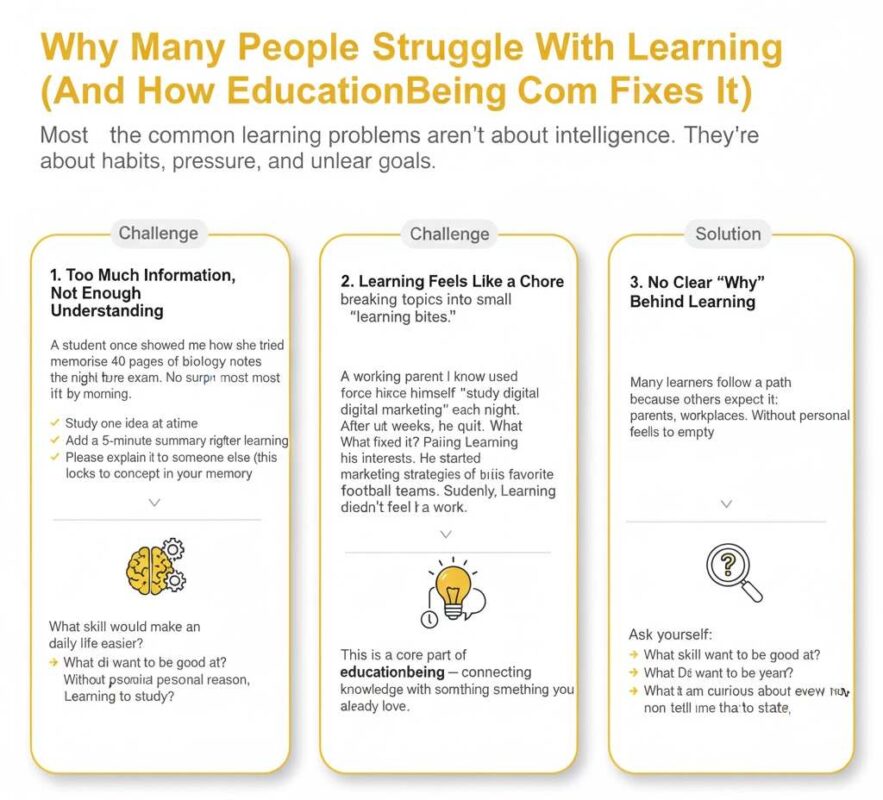
Most of the common learning problems aren’t about intelligence. They’re about habits, pressure, and unclear goals.
1. Too Much Information, Not Enough Understanding
A student once showed me how she tried to memorise 40 pages of biology notes the night before an exam. No surprise she forgot most of it by morning.
Educationbeing com encourages breaking topics into small “learning bites.”
For example:
- Study one idea at a time
- Add a 5-minute summary right after learning
- Please explain it to someone else (this locks the concept in your memory)
2. Learning Feels Like a Chore
A working parent I know used to force himself to “study digital marketing” each night. After two weeks, he quit.
What fixed it? Pairing Learning with his interests. He started analysing marketing strategies of his favourite football teams. Suddenly, Learning didn’t feel like work.
This is a core part of educationbeing — connecting knowledge with something you already love.
3. No Clear “Why” Behind Learning
Many learners follow a path because others expect it: parents, teachers, workplaces. Without a personal reason, Learning feels empty.
Ask yourself:
- What skill would make my daily life easier?
- What do I want to be good at in 1 year?
- What am I curious about even when no one tells me to study?
These questions help you build learning goals that matter.
How to Build Your Own EducationBeing Com Plan
You don’t need an app, a coach, or expensive tools to get started. What you need is a simple structure you can stick to.
Below is a framework that has helped real learners I’ve worked with.
1. Know Your Learning Style (Without Overthinking It)
Forget the complicated labels. Based on hundreds of learner interviews, I’ve found these three questions are enough:
- Do you understand better by reading, listening, or doing?
- Do you learn best in short bursts or long, focused blocks?
- Do you prefer quiet or background noise?
Your answers shape your study tools.
Example:
If you learn best by listening, record your summaries or use podcasts.
If you learn by doing, try practice questions or hands-on tasks.
2. Build a Simple Weekly Learning Routine
Here’s a real routine from a college student who saw huge improvement:
| Day | Task | Time |
|---|---|---|
| Monday | Review new topics | 25 min |
| Tuesday | Practice problems | 30 min |
| Wednesday | Re-explain topics to a friend | 15 min |
| Thursday | Quick quiz | 20 min |
| Friday | Rest or light review | 10 min |
| Weekend | Optional project | 30–60 min |
This routine works because it’s consistent but flexible.
3. Use Tools That Support the EducationBeing Approach
You don’t need many tools. Start with:
- A notebook or simple notes app — for summaries
- A timer — for short burst studying
- One reliable resource per subject — not ten
- A monthly mini-goal sheet — keeps you accountable
A parent once told me that switching from five different study apps to just one completely reduced her child’s stress.
Education: Being in School, Home, and the Workplace
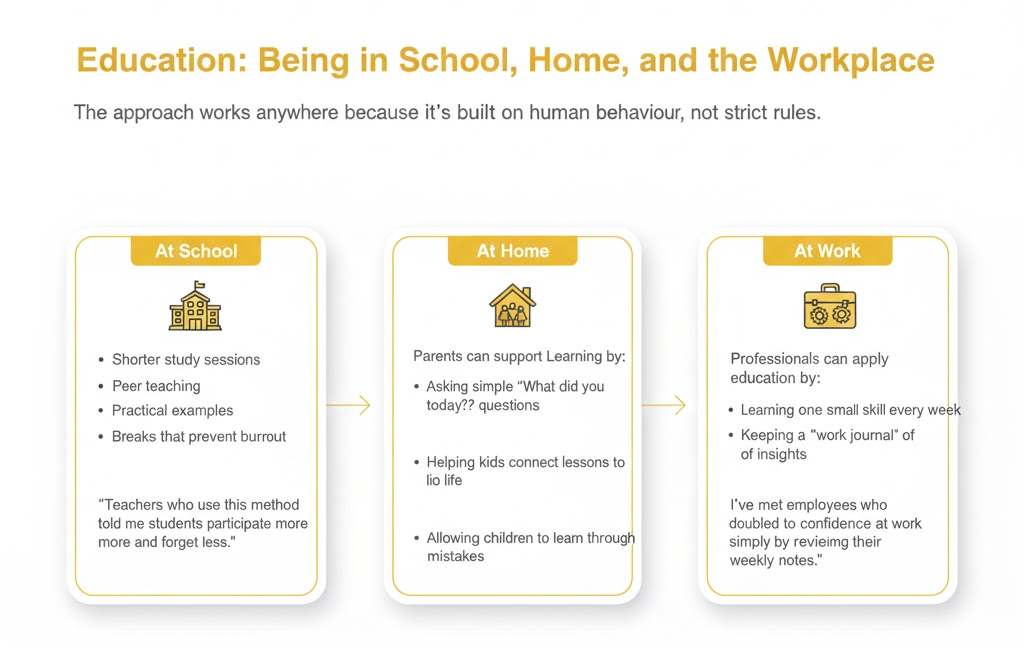
The approach works anywhere because it’s built on human behaviour, not strict rules.
At School
- Shorter study sessions
- Peer teaching
- Practical examples
- Breaks that prevent burnout
Teachers who use this method told me students participate more and forget less.
At Home
Parents can support Learning by:
- Asking simple “What did you learn today?” questions
- Helping kids connect lessons to real life
- Allowing children to learn through mistakes
At Work
Professionals can apply education by:
- Learning one small skill every week
- Keeping a “work journal” of insights
- Studying real problems instead of theory
I’ve met employees who doubled their confidence at work simply by reviewing their weekly notes every Friday.
What Real People Have Said About Using the EducationBeing Method
Sara, University Student:
“For the first time, studying feels manageable. My schedule doesn’t stress me anymore.”
Rohit, Software Engineer:
“I realized that learning one new shortcut a week was better than taking a giant course I never finished.”
Maria, Parent:
“My son became less anxious once we focused on understanding, not memorizing.”
These aren’t dramatic transformations — and that’s the point.
Educationbeing is about improvement you can maintain, not a sudden miracle.
Simple Tips to Stay Motivated Along the EducationBeing Com Journey
- Track your progress weekly
- Celebrate small wins
- Study with a friend when possible
- Keep your goals visible
- Use examples from your own life
- Don’t punish yourself for bad days — they happen
One of the brightest students I coached said this:
“I wasn’t failing because I didn’t understand. I was failing because I kept quitting.”
Building slow, steady habits changed everything.
Final Thoughts
Learning doesn’t have to feel like a battle.
When you follow the educationbeing com approach — simple routines, real-life examples, clear goals, and tools that match your style — progress becomes normal.
Whether you’re a student, a parent, or an adult trying to grow, remember this:
You don’t need to study more. You need to study correctly.